

Real Estate Website Design: Listings, Search and Lead Capture
Real estate website design starts with reliable information. Attractive photography cannot fix unavailable listings, outdated prices or enquiries nobody follows up. This guide helps property businesses serving Saudi Arabia define manageable listings and buyer journeys, with decisions adaptable to actual operations in the UAE and Egypt.
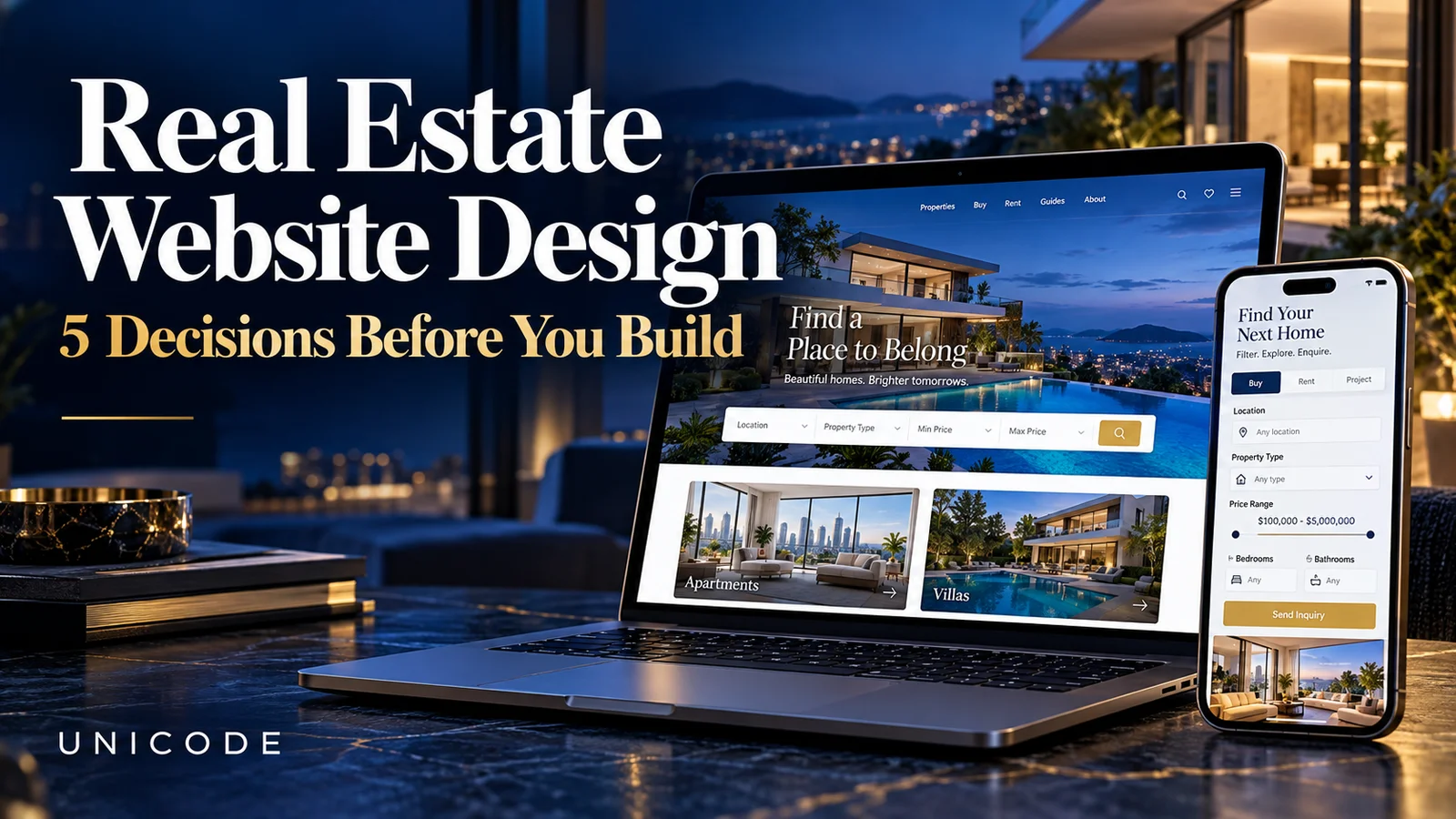
Choose your real estate website design model
A developer promoting its own projects needs a different product from a brokerage combining several listing sources. A platform allowing third-party advertisers needs additional accounts, review rules and permissions. Do not copy a large property portal when your initial requirement is a small project catalogue and relevant enquiries.
Document who creates a listing, who approves it and who changes its availability. Specify sales, rentals or both, and distinguish individual units from developments. These choices shape data fields, filters and costs. Advertiser accounts, paid listings and moderation are separate workflows, not minor features that can be added without affecting the original development scope.
Agree listing fields and their source
Create a consistent data model for property type, general location, area, availability and an approved price where published. Clarify measurement units and currency. State whether a rental amount covers a month, year or another period. Free-text descriptions alone make comparisons difficult because different employees may describe the same attribute in different ways.
Use authorised, current photographs and distinguish project visualisations from photographs of completed units. Generated architecture must not impersonate real inventory. Have the appropriate adviser confirm advertising requirements for the market where the business operates. This article discusses website requirements, not the legal interpretation of advertising licences or brokerage regulation.
Select useful filters and an indexing plan
Begin with criteria customers actually use: sale or rent, city or district, property type and price range. Add bedrooms or area only if those fields are consistently maintained. Incomplete filters produce misleading results. Provide a clear reset action and useful alternatives when a search returns nothing, rather than leaving visitors at an unexplained blank screen.
On mobile, visitors should be able to adjust filters and return from a listing without losing their search. Search-engine handling needs its own plan. Google’s faceted navigation guidance explains that filter combinations can produce many URLs. Agree which pages deserve indexing rather than publishing every combination or indiscriminately blocking the whole catalogue.
Design availability updates before launch
Decide how frequently listings are reviewed and who receives an alert when a record becomes stale. Staff need practical availability states reflecting the business process. Internal stages may differ from the labels shown publicly, but an expired opportunity should not remain presented as confirmed availability.
If inventory comes from an external system, inspect its interface and update rules before promising automatic synchronisation. Define what happens when the connection fails or updates arrive late. Who checks stale records? A real estate website design project with live integrations must test these conditions during acceptance, rather than treating them as operational problems to discover after launch.
Keep the property context with each enquiry
Save the listing reference and page with every request. A message saying “Please send details” is much less useful when the team cannot identify the property. Start with a name, contact method and a convenient response time where necessary. Do not collect identity documents or financial records for a basic initial enquiry.
Explain that submitting a request does not reserve a property or guarantee availability. Assign ownership and a follow-up status when enquiries move between employees. A real estate CRM may support that workflow, but the sales system and public property website are different scopes. Specify how they connect and who maintains each component.
A manageable first-release example
Imagine a fictional brokerage with apartment sales and rentals in a defined area. Staff create and review listings, maintain availability and use four core filters. Enquiries retain the property reference. The first release does not necessarily need public advertiser accounts or payment processing. This is a planning example, not a Unicode customer result.
Discuss website development around that actual workflow. Ask the proposal to cover data entry, migration, languages, filters, integrations and support separately. For bilingual publishing, name the person translating descriptions and location terminology. The two versions should preserve the same property facts, pricing and availability rather than operating as disconnected catalogues.
Real estate website design acceptance checks
- Combine two filters and reset only one.
- Verify a listing’s price, currency and area units.
- Update availability and inspect the public result.
- Submit an enquiry and check its property reference.
- Test incomplete records and oversized photographs.
- Review empty results and language switching on mobile.
Measure follow-up-ready enquiries, qualified requests and agreed viewings separately from clicks. Flag technical tests so they do not inflate customer counts. These distinctions help identify friction without claiming that every completed form produces a sale. Keep the reporting definitions stable when comparing performance before and after a website change.
Questions before requesting a proposal
Should we build an app instead? A usable mobile website may cover the first release. Repeated account-based tasks, saved preferences and useful notifications can justify a separate app business case.
Should old listings stay visible? Set review and archive rules. An unavailable property can sometimes provide project context when clearly labelled, but it must not mislead someone searching for current availability.
Is CRM integration essential? It depends on team size and follow-up complexity. A controlled enquiry list may work initially; larger teams may need assignment, permissions and more detailed integration.
Takeaway and technical reference
Useful real estate website design combines comparable information, maintained availability and enquiries that preserve context. Review Google’s filter URL guidance with your developer as part of a tailored crawling plan, not a universal switch.
Discuss your property website requirements
Send Unicode your business model, listing source, update responsibilities, required filters and languages, and current follow-up system. Those details support a practical scoping conversation beyond the appearance of the homepage. Discuss your project on WhatsApp.