

Law Firm Website Design for the Gulf: Trust, Practice Areas and Consultations
Law firm website design should explain the practice, present verifiable professional information and offer an appropriate first-contact route. Formal photographs and generic statements about trust do not establish a useful client journey. This guide addresses public website requirements for firms serving Saudi Arabia and other genuine markets. It is not legal advice: the firm’s qualified advisers must approve professional claims, privacy wording and the rules applicable to its own publication and intake process.
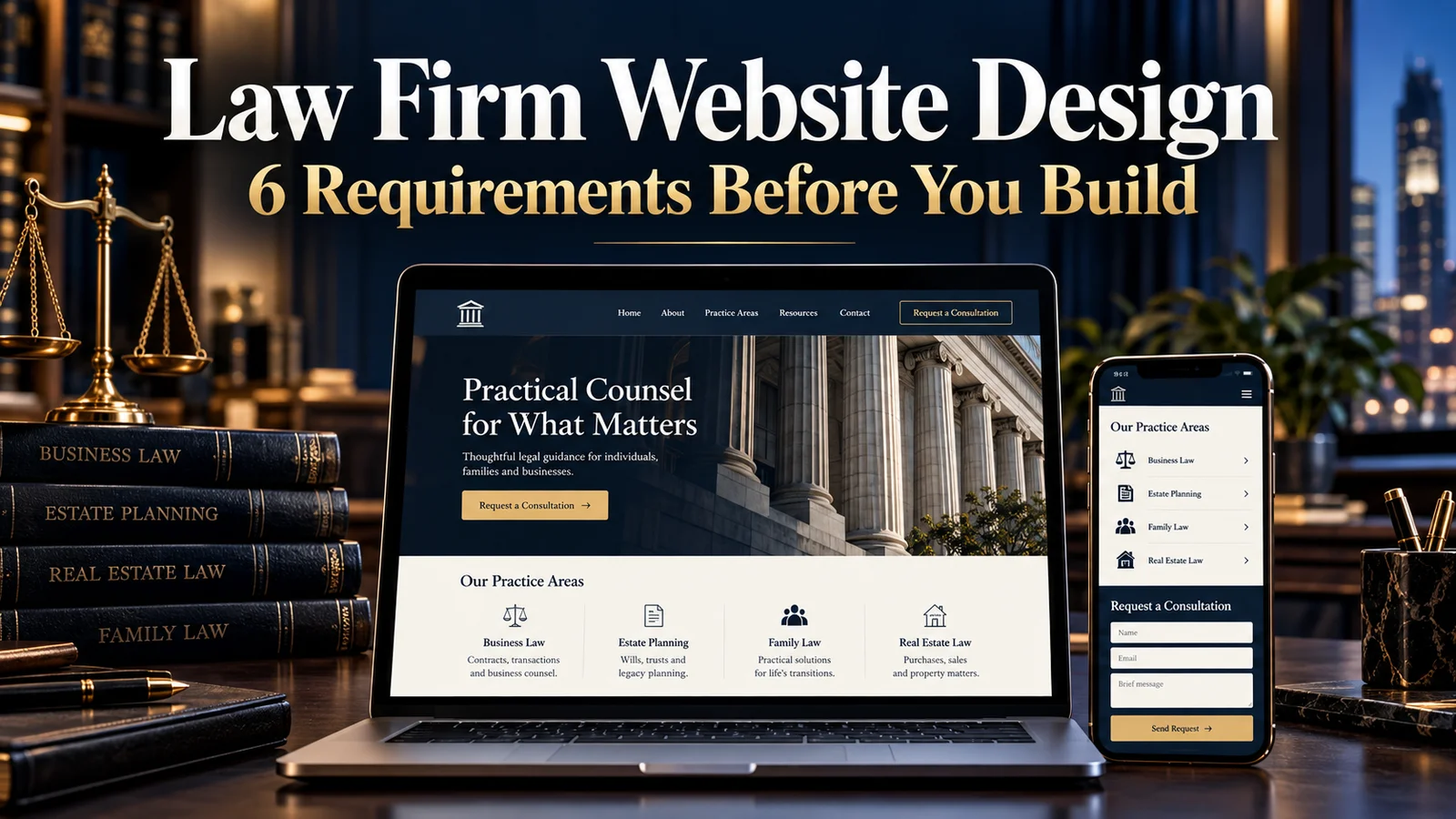
Define your law firm website design objective
Decide whether the practice serves businesses, individuals seeking a particular service, or both. Organise navigation around that audience. An unexplained list of twenty specialties may communicate less than a few clear practice descriptions. Explain the scope without promising case outcomes or response deadlines the team cannot consistently meet.
Specify the real next step: a callback request, an appointment request or preliminary information for review. Submitting a form should not imply that the firm has accepted an instruction. The responsible professional should approve the acknowledgement and define when further information is requested. A developer implements that process; they do not determine the professional relationship on the firm’s behalf.
Publish professional information you can verify
Use approved names, qualifications, experience descriptions and genuine staff photographs. Do not create fictional lawyers with generated portraits or attach unsupported memberships to their profiles. Give an authorised editor a straightforward way to update the team when people join, leave or change responsibilities. Outdated credentials undermine trust regardless of visual polish.
You can explain working methods without exposing client identities or case details. Any case example needs appropriate approval and review. When assessing Unicode’s portfolio, distinguish website execution quality from evidence of a law firm’s professional results. A design demonstration cannot support a claim about successful legal work.
Make practice pages understandable
Give each core practice area a focused page describing its audience, scope and appropriate first-contact information. Have a qualified member of the firm review the text. Avoid turning the service page into a complex legal treatise or implying that a general procedure fits every situation. Readers should understand whether their enquiry relates to your work.
For bilingual law firm website design, keep names, credentials and contact details consistent. Localise terminology without expanding the service beyond what the firm offers. Assign responsibility for future updates in both languages. English content should not remain an untouched translation after the Arabic version changes, particularly when important factual information is involved.
Keep initial enquiries proportionate
An initial form may collect a name, contact method, broad enquiry type and a short general description. Ask visitors not to send sensitive documents before the firm provides an appropriate channel. Identity files or case records should not be mandatory merely to request a callback. Document exchange is a separate requirement with approved access and retention rules.
Explain what happens next and provide understandable errors when a field is missing. Test the journey on a phone without forcing account creation. Avoid blanket promises that every channel is completely secure. Ask the development partner to describe actual controls, and have the responsible adviser approve privacy statements rather than treating them as marketing copy.
Control who can access requests
Identify who may read enquiries, reply to them or export records. A receptionist does not automatically require administrator access. The OWASP authorisation guidance recommends least privilege and access checks. Verify those controls with tests rather than relying on role names alone.
If enquiries need assignment and follow-up, consider a consulting services CRM while keeping it separate from a client document portal. Record ownership and general status without feeding unnecessary sensitive details into marketing analytics. Messages and accepted instructions are different outcomes; define qualification according to the firm’s actual intake process.
Plan mobile usability and maintenance
A professional website does not need animations that delay access to important information. Specify readable text, simple navigation, accurate contact links and optimised images. Arabic should read right to left and English left to right. Language switching should lead to the equivalent page rather than restarting the visitor at the homepage.
When comparing development proposals, separate content, translation, design, forms, hosting and support. Confirm domain ownership, administrator access and backup responsibilities. Arrange training for the editor responsible for team and practice updates, including how changes are reviewed before publication. The handover matters as much as the initial visual presentation.
A planning example and acceptance checks
Imagine a fictional firm serving businesses across three practice areas. Its first release has three service pages, a team page and a limited callback form. Reception sees the broad subject and contact method; the appropriate professional requests more information through an approved channel. This illustrates scope only, not a client case or a compliance assurance.
- Compare team information across both languages.
- Submit incomplete and complete requests from a phone.
- Verify notification delivery to the approved recipient.
- Check access using a restricted staff account.
- Inspect contact links and acknowledgement wording.
- Update a practice description through the agreed review process.
Questions before selecting a partner
Do we need a case library? Not automatically. General resources can be useful, but examples and documents require review. Do not add a library merely to increase the page count.
Should we launch with a client portal? A portal involves accounts, documents, approvals and permissions. Start with a clear business need rather than treating it as another contact-form field.
Can we publish before all content is ready? A smaller, accurate first release is preferable to empty pages or invented credentials. Complete the essential approved scope, then expand deliberately.
Takeaway and reference
Good law firm website design combines a credible identity, proportionate intake and manageable follow-up. The OWASP reference supports access-control review; it does not certify a website’s security or legal compliance.
Discuss your firm’s website requirements
Send Unicode your practice areas, languages, approved team information, initial enquiry workflow and any separate portal requirement. These details support a focused implementation conversation without unnecessary functionality. Discuss the website on WhatsApp.