

Home Services App Development: From Booking to Technician Visit
Home services app development needs more than a technician directory and a booking button. Customers need a clear service scope, while staff need appointments they can fulfil and information that supports the visit. This guide helps cleaning, maintenance and home-service businesses serving Saudi Arabia define an operational first release. It does not guarantee enquiry volumes or arrival times that the team cannot support.
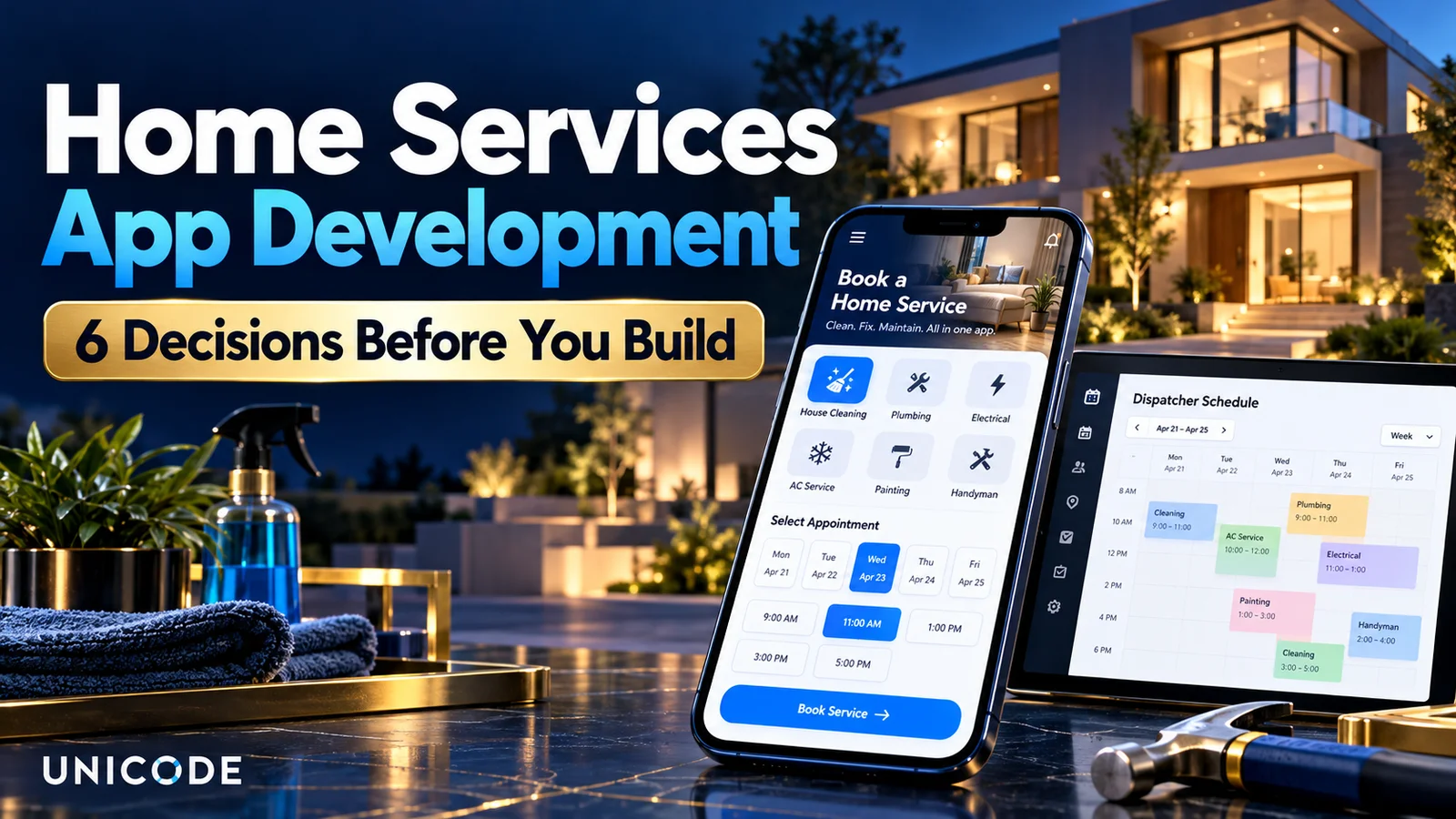
Define your home services app development model
Does the business deliver services through its own staff, connect customers with independent providers or combine both? These models change acceptance, assignment and administration requirements. “An app like a famous marketplace” is not a workflow. Identify who accepts the request, sets the price and handles missing capacity.
Begin with services the team can manage. Defined cleaning packages differ from faults needing inspection. If most requests require a call before acceptance, design an honest service-request process rather than promising instant booking. Terminology should communicate the actual operation, not simply make the interface sound more sophisticated.
Describe each service and necessary inputs
State inclusions, exclusions and the approved basis for delivery. Does cleaning require an area estimate? Does maintenance begin with an inspection? Are materials included? Set these details before building options and pricing screens. Otherwise, the customer and technician may discover different expectations only when the visit begins.
Collect information that supports the task. A general note or optional problem photograph may be enough; explain that people, documents and unnecessary private details should not appear in it. Define who can access attachments. The ability to upload files does not justify collecting everything a customer has on their phone.
Make coverage and appointment capacity realistic
Define supported districts, operating hours and travel time between jobs. Availability must reflect actual team capacity rather than a fixed calendar displayed for every service. A technician qualified for one task is not automatically suitable for another because their schedule contains a gap. Document skills and restrictions before designing assignment rules.
Offer manual address entry where it supports the task, instead of demanding continuous tracking. Android’s permission guidance recommends minimising access requests and appropriate alternatives. Customers should understand why location is needed and how to continue if they decline access. Do not turn a convenience feature into an unnecessary barrier.
Define pricing and additional-work approval
Some services have an approved fixed scope; others require inspection and a later quotation. Explain the difference before submission. If the initial amount covers a visit only, do not present it as a complete repair price. The business and its advisers approve prices and policies; developers should not invent them.
Specify how customers approve extra work or materials outside the original scope. Preserve the approved details so both sides can understand the decision later. Do not silently change totals after submission. Where payments are supported, distinguish collection status from service acceptance and completion. A paid request does not establish that the job has been delivered.
Map dispatch and everyday exceptions
Who accepts the request? What happens if a technician does not respond, arrives late or cannot enter the property? Define statuses and ownership, such as new, being assessed, confirmed, travelling, in progress and completed under the agreed rules. A completion button should not bypass a required handover step.
Discuss supervisor and technician functions within the mobile development scope. Employees should not see unrelated requests merely because they use the same app. Manual assignment by a supervisor may suit an initial operating volume. Automation matters only when its rules work; it should not hide pending requests or create conflicting jobs.
Plan support, reporting and maintenance
Provide a route for rescheduling, cancellation and problem reports, with responsibility for follow-up. Support needs the service reference, status and contact route, not unrestricted access to all business data. Explain connection failures and test returning to a request without producing an unintended duplicate.
Measure valid requests, accepted jobs, completed services and repeat use separately. Booking clicks are not completed work. Flag technical tests and record operational closure reasons. Review which services and coverage areas attract suitable demand. An app cannot compensate for insufficient staffing or unsupported coverage simply by generating more messages.
Home services app development: example and acceptance checks
Imagine a fictional business starting with cleaning and maintenance inspections in a limited area. Customers select a service, address and preferred time; a supervisor confirms capacity and assigns the team. Cleaning and inspection have different request flows, without promising a complete repair price before assessment. This is a planning example, not a Unicode customer case.
- Request service outside the supported coverage.
- Try a time conflicting with an existing job.
- Decline location and enter an address manually.
- Assign a technician lacking the required skill.
- Test approval of additional work in a test environment.
- Return after disconnection without duplicating the request.
Test customer, supervisor and technician accounts, not just the booking screen. Review both languages and train staff to handle exceptions as well as successful visits.
Questions before commissioning the project
Do technicians need a separate app? Only where repeated tasks justify it. A mobile dashboard may be sufficient initially. Base the decision on workflow, permissions and notification needs rather than the number of apps in a proposal.
Is automatic dispatch essential? Not always. Structured manual assignment can suit a first release. Automation needs testable skills, time and coverage rules rather than simply moving confusion into software.
Should every service launch immediately? Focus on an operationally manageable scope. Expand when the team understands how to add services, skills and districts without breaking current workflows.
Takeaway and technical reference
Useful home services app development aligns customer expectations with service scope and delivery capacity. Review the permission minimisation reference, then test your actual daily scenarios before launch.
Discuss your service app requirements
Send Unicode your services, genuine coverage, pricing process, teams, staff roles and acceptance workflow. These inputs support a manageable first release rather than generic features disconnected from operations. Discuss your app on WhatsApp.